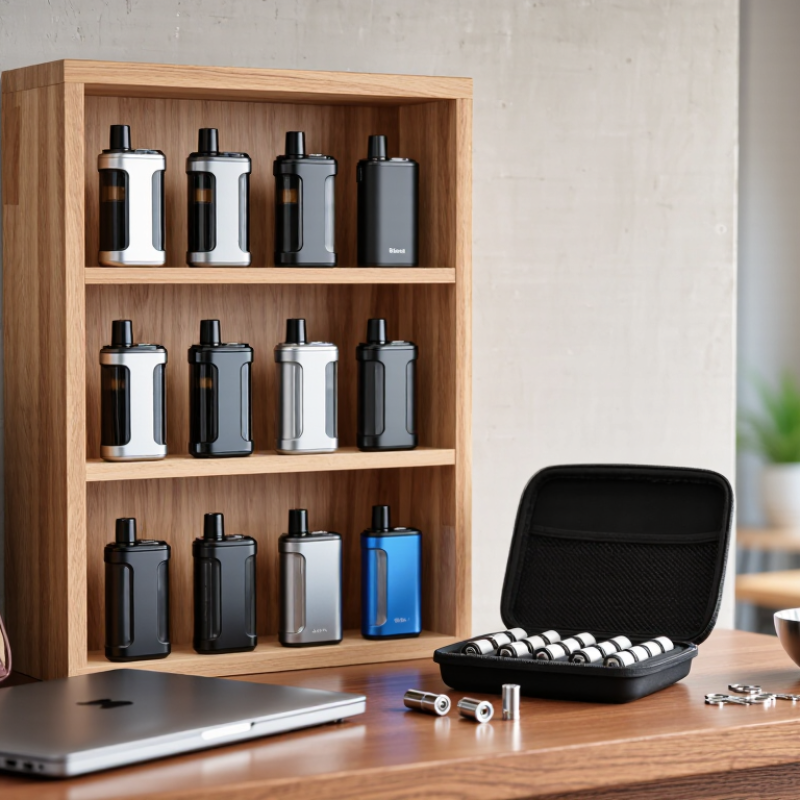
| Device body and casing |
Examine the housing, seams, mouthpiece, screen, buttons, and airflow openings for cracks, dents, punctures, or deformation. |
Clean, dry, intact, and free from structural damage. |
The device is cracked, crushed, punctured, badly dented, or unusually hot. |
Stop using it and follow local electronic-waste or battery-recycling guidance. |
| Battery condition |
Look for swelling, lifting panels, damaged insulation, leaking fluid, corrosion, or a battery that no longer fits normally. |
No swelling, leakage, corrosion, odor, or visible battery damage. |
Any swelling, hissing, smoke, chemical odor, leakage, or rapid heating is present. |
Do not charge, activate, puncture, or disassemble the device. Move away from flammable materials only if safe to do so and seek appropriate disposal advice. |
| Battery charge level |
Check the charge level after extended storage, especially if the device uses a rechargeable lithium-ion battery. |
A stored rechargeable device is preferably kept partially charged, commonly around 30–50%, when practical. |
The battery is completely depleted for a prolonged period, will not accept charge, or becomes hot during charging. |
Use only the specified charging method. Stop immediately if abnormal heat, odor, noise, or swelling occurs. |
| Charging port and contacts |
Inspect the USB port, charging pins, cable connection, and electrical contacts for dust, moisture, bent parts, or corrosion. |
Contacts are clean, dry, undamaged, and free of residue. |
The port is wet, corroded, loose, bent, burned, or contaminated with e-liquid. |
Do not insert metal objects or use a wet device. Have the device safely recycled if the port cannot be cleaned without damage. |
| E-liquid tank or pod |
Check the tank, pod, seals, mouthpiece, and connection area for cracks, leaks, separation, or dried residue. |
The tank or pod is intact, securely fitted, and free from leakage. |
Liquid is leaking, the pod is cracked, seals are damaged, or liquid has reached the battery or charging area. |
Remove the pod if safe, avoid skin and eye contact, clean exposed surfaces according to the device instructions, and replace damaged parts. |
| E-liquid appearance and age |
Observe color, clarity, odor, and consistency. Review the product’s expiry or recommended-use information where available. |
Liquid has no unexpected odor, separation, contamination, or major appearance change. |
Liquid smells unusual, contains particles, has separated abnormally, or its age and contents are unknown. |
Do not taste or use questionable liquid. Dispose of it in accordance with local waste requirements. |
| Moisture and condensation |
Check for water droplets, condensation, dampness, or evidence that the device was stored in a humid location. |
The device is completely dry inside and out before activation or charging. |
Moisture is present near the battery, circuit board, charging port, or controls. |
Do not power on or charge it. Allowing liquid-damaged electronics to be reused can create a short-circuit or fire risk. |
| Storage temperature exposure |
Consider whether the device was exposed to direct sunlight, a hot vehicle, freezing conditions, heaters, or sudden temperature changes. |
It has been stored in a cool, dry, well-ventilated place away from direct sunlight and extreme temperatures. |
The battery or liquid container is distorted, damaged, frozen, overheated, or shows pressure-related leakage. |
Let the device return gradually to room temperature in a dry area. Do not heat, freeze, or rapidly cool it. |
| Accidental activation protection |
Check whether the fire button can be pressed accidentally and whether the device has an available lock, standby, or power-off function. |
The device is switched off or locked, and the button cannot be activated during storage or transport. |
The device activates by itself, the button is stuck, or the control system behaves unpredictably. |
Do not carry or store it in a pocket, bag, or container where the button can be pressed. |
| Loose-battery safety |
For devices with removable batteries, inspect the battery wrap, terminals, and battery compartment. |
Each battery has an intact insulating wrap and is stored separately in a protective case. |
The wrap is torn, the terminals are exposed, or loose batteries are stored with keys, coins, tools, or other metal objects. |
Do not use damaged cells. Keep loose batteries in a non-conductive case and never carry them unprotected. |
| Charging procedure after storage |
Use the intended charger or charging system and monitor the first charging cycle after storage. |
Charging occurs on a non-flammable, stable surface while the device remains at normal temperature. |
The charger, cable, or device becomes excessively hot, emits an odor, makes unusual sounds, or repeatedly stops and restarts. |
Unplug it safely, stop using the equipment, and do not leave it charging unattended or overnight. |
| Storage location |
Assess the storage area for heat, sunlight, water, flammable materials, children, and pets. |
Stored separately from flammable items, in a dry, shaded, secure location away from children and pets. |
The device was stored under bedding, in a vehicle, near a heater, in direct sunlight, or where children can access it. |
Relocate it to a secure, cool, dry, ventilated area and keep it away from combustible materials. |
| Function test |
After visual inspection, check the controls, display, airflow, charging response, and temperature without inhaling immediately. |
The device responds normally without unexpected heat, smell, noise, leakage, or automatic activation. |
It fires without input, overheats, produces smoke, leaks, or behaves inconsistently. |
Stop testing, disconnect it from power if safe, and arrange proper disposal or professional assessment. |
 Trivapix Vape