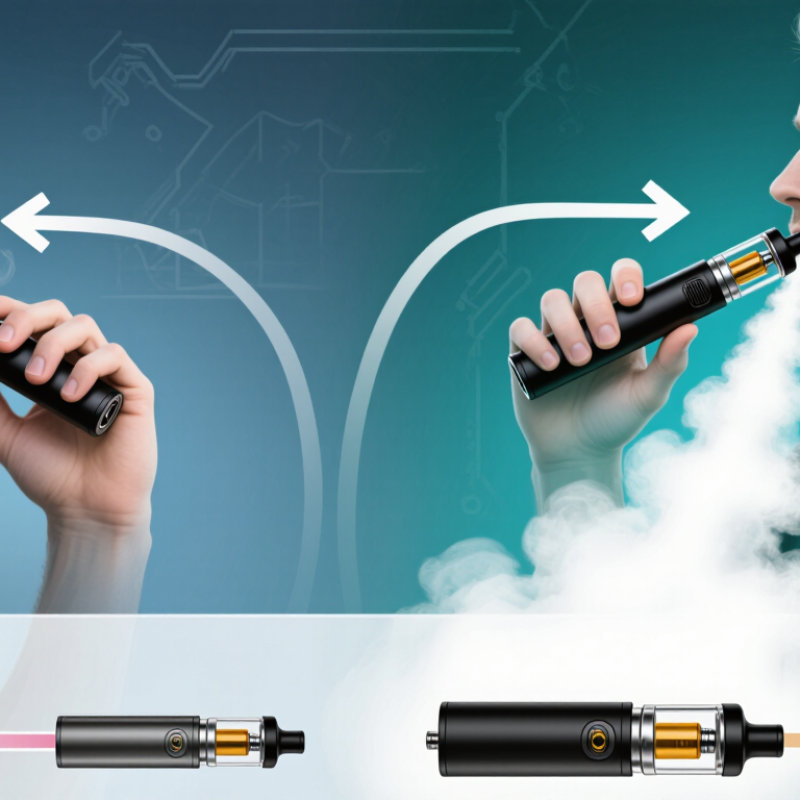
What is mouth-to-lung vs direct-to-lung vaping? This question describes two different inhalation styles, airflow patterns, and device experiences. In mouth-to-lung vaping, users draw vapor into the mouth before inhaling it into the lungs. The sensation resembles smoking a traditional cigarette. Direct-to-lung vaping sends vapor straight into the lungs through a deeper, more open inhale. The difference is immediately noticeable: MTL feels tighter, while DTL feels airier and produces larger visible clouds.
Device design helps explain this contrast. MTL products commonly use narrower airflow, lower power, and smaller liquid delivery systems. DTL devices usually require wider airflow and higher power. They may also consume more e-liquid during each session. These descriptions are technical, not health endorsements. The National Academies of Sciences, Engineering, and Medicine reported that e-cigarette emissions can contain potentially harmful substances. The U.S. Centers for Disease Control and Prevention also states that no tobacco product, including e-cigarettes, is risk-free.
Evidence remains uneven. Some studies examine nicotine delivery, while others measure user behavior or aerosol chemistry. Results can change with device settings, liquid formulation, and inhalation technique. That matters. A 2024 CDC National Youth Tobacco Survey estimated that 1.63 million U.S. middle and high school students currently used e-cigarettes. This reinforces the need for age-appropriate information and responsible communication. The NHS and other public-health bodies distinguish vaping from smoking, yet they do not describe vaping as harmless. This guide compares MTL and DTL clearly, while acknowledging uncertainty, individual differences, and the limits of current research. Even familiar terminology can be misleading.
What Is Mouth to Lung vs Direct to Lung Vaping?
What Mouth-to-Lung and Direct-to-Lung Vaping Mean
Mouth-to-lung vaping, or MTL, uses a two-step inhale. Vapor first rests in the mouth, then moves into the lungs. The draw usually feels tighter, like sipping through a narrow straw. Lower power settings often create smaller clouds and a gentler throat sensation. Many users find this pattern easier to control.
Direct-to-lung vaping, or DTL, sends vapor straight into the lungs. Its airflow feels more open, like breathing through a wide tube. Higher power can produce warmer vapor and larger clouds. That does not automatically mean better performance. It can also increase aerosol exposure during each puff.
Evidence needs careful reading here. The National Academies reported that e-cigarette aerosol can contain nicotine, ultrafine particles, and potentially harmful chemicals. The CDC also states that no vaping product is risk-free. Nicotine delivery varies with device power, liquid concentration, puff length, and user experience. A 2023 professional review in Tobacco Control found substantial variation in emissions across products and settings. The label alone cannot predict exposure. That is easy to overlook. MTL and DTL describe inhalation habits, not safety levels. Adults who do not use nicotine should not start, and users should follow local product and age regulations.
Mouth-to-lung (MTL) vaping resembles drawing smoke from a traditional cigarette. You pull vapor into your mouth first, then inhale it into your lungs. The airflow feels narrow, like sipping through a straw. A lower-power setting often creates a smaller, cooler aerosol. It may feel gentler. However, gentler does not mean harmless. Vape aerosol can contain irritants and other potentially harmful substances.
The process has two distinct breaths. First, the device heats its liquid and produces aerosol as you draw. The aerosol collects briefly in your mouth. Then, a second breath carries it into your lungs. This slower method usually works with restricted airflow and shorter draws. A tight draw, warm mouthfeel, or mild throat sensation can help users recognize the technique. Coughing may signal excessive heat, a draw that is too long, or personal sensitivity.
Direct-to-lung vaping skips that mouth-holding step. It sends aerosol straight into the lungs through a wider airflow path. MTL usually feels more controlled, while direct-to-lung feels fuller and faster. That comparison is easy to oversimplify. Comfort varies with breathing habits, device settings, and individual health. No vaping method is risk-free, and people with breathing symptoms should consider professional medical advice before using any inhaled aerosol product.
| Comparison Dimension | Mouth-to-Lung (MTL) | Direct-to-Lung (DTL) |
|---|---|---|
| Inhalation sequence | Vapor is first drawn into the mouth and then inhaled into the lungs. | Vapor is inhaled directly from the device into the lungs in one continuous draw. |
| Typical airflow | Tighter or more restricted airflow, which resembles the draw of a traditional cigarette. | More open airflow that allows a larger volume of air to mix with the aerosol. |
| Vapor volume | Usually produces a smaller, more cigarette-like amount of aerosol per puff. | Usually produces a larger and denser aerosol cloud per puff. |
| Puff style | Generally uses slower, shorter-to-moderate draws with a restricted airflow setting. | Generally uses deeper, more air-intensive draws through an open airflow setting. |
| Common power range | Often operates at lower power, commonly about 7–20 watts, depending on the coil and device. | Often operates at higher power, commonly about 30–100 watts or more, depending on the coil and device. |
| Coil characteristics | Usually uses higher-resistance coils that require less power and produce less aerosol. | Usually uses lower-resistance coils that require more power and produce more aerosol. |
| E-liquid characteristics | Often paired with thinner e-liquids, such as formulations with a higher proportion of propylene glycol (PG), although device compatibility varies. | Often paired with thicker e-liquids containing more vegetable glycerin (VG) to support larger aerosol production, although device compatibility varies. |
| Nicotine concentration | Frequently used with higher nicotine concentrations because each puff generally produces less aerosol; the appropriate concentration varies by product and user. | Frequently used with lower nicotine concentrations because each puff can deliver more aerosol; the actual nicotine intake depends on the liquid, device, and puffing behavior. |
| Throat sensation | Can provide a more noticeable throat sensation, especially with higher nicotine or higher-PG liquids. | Often feels smoother at lower nicotine concentrations, but the larger inhaled volume may feel intense for some users. |
| Battery and e-liquid use | Typically consumes less battery power and e-liquid per puff. | Typically consumes more battery power and e-liquid per puff because of higher power and airflow. |
| Learning curve | Often easier for people who prefer a familiar, cigarette-like inhalation pattern. | May require adjustment to the larger airflow, deeper inhalation, and greater aerosol volume. |
| Nicotine exposure considerations | Higher liquid strength does not automatically mean higher total intake; intake depends on puff duration, frequency, device output, and absorption. | Lower liquid strength does not automatically mean lower total intake because larger aerosol volumes and longer sessions can increase exposure. |
| Health and safety note | Neither MTL nor DTL vaping is risk-free. E-cigarette aerosol can contain nicotine and other potentially harmful substances, and nicotine can cause dependence. Non-smokers, young people, and pregnant individuals should not use nicotine-containing products. | Neither MTL nor DTL vaping is risk-free. E-cigarette aerosol can contain nicotine and other potentially harmful substances, and nicotine can cause dependence. Non-smokers, young people, and pregnant individuals should not use nicotine-containing products. |
Note: Power ranges, coil resistance, e-liquid composition, nicotine concentration, and aerosol output vary widely by device and usage pattern. Device instructions and applicable regulations should always be followed.
Direct-to-lung (DTL) vaping sends aerosol directly into the lungs instead of holding it in the mouth first. The user opens the airflow and takes a deeper inhale. A low-resistance coil heats the liquid quickly, while the battery delivers higher power. Heat creates an aerosol, not harmless water vapor. The National Academies reports that exposure changes with device settings, liquid ingredients, and puff duration (NASEM, 2018). That variability matters.
During a DTL puff, air moves across the heated coil and carries fine particles through the mouthpiece. Nicotine, flavor compounds, solvents, and thermal by-products may reach the lower respiratory tract. The same National Academies review found that higher temperatures can increase certain carbonyl emissions, including formaldehyde and acetaldehyde. However, real-world exposure depends on equipment condition and inhalation habits. A burnt taste is a warning, not a reliable safety test.
Public-health evidence requires restraint. The CDC states that aerosol may contain nicotine, ultrafine particles, and potentially harmful substances (CDC, 2024). DTL can feel smoother, yet smoother does not mean safer. Users may take longer or more frequent puffs without noticing. That explanation is useful, but incomplete. Airflow, coil age, power, and breathing patterns can change the result. Laboratory measurements also cannot fully reproduce daily use, so no single test represents every DTL experience.
What Is Mouth to Lung vs Direct to Lung Vaping?
Key Differences in Airflow, Vapor, and Inhalation
Mouth to lung, or MTL, resembles the action of smoking a cigarette. You draw vapor into your mouth first, then inhale it into your lungs. The airflow feels tighter, like sipping through a narrow straw. Vapor production is usually modest, and each puff feels more controlled. This style often suits people who prefer a slower rhythm and a sharper throat sensation. Lower airflow can also make inhalation feel less abrupt.
Direct to lung, or DTL, sends vapor straight into the lungs. It requires wider airflow and a deeper breath. The result is usually a larger vapor cloud and a softer, more open draw. DTL devices often use higher power, which can heat the liquid faster. That may increase vapor density, but it can also produce a warmer inhale. The sensation is more like breathing through an open tube.
The difference is not always clean. Adjustable airflow can place a device between both styles. Personal comfort, liquid composition, and nicotine strength also affect the experience. Higher nicotine levels may feel intense during deep DTL inhalation. That detail deserves caution. Even experienced users can misjudge a setting after changing devices. Start with gentle airflow and short puffs. Listen to throat irritation, coughing, or dizziness. These signs suggest stopping, not pushing through. Vaping is not risk-free, and individual reactions vary.
Key differences in airflow, vapor volume, and inhalation pattern
A tighter draw brings vapor into the mouth first, followed by a smaller, cigarette-like inhalation into the lungs.
An open draw sends vapor directly into the lungs, typically producing a larger inhaled volume and a denser cloud.
The chart uses representative, evidence-informed use ranges: approximately 75 mL versus 225 mL of inhaled volume per puff, 3 versus 4.5 seconds of puff duration, and a 2/10 versus 8/10 airflow-openness scale. Actual results vary with device design, power, liquid formulation, and user behavior.
Choosing between mouth-to-lung and direct-to-lung vaping depends on draw style, nicotine delivery, and daily comfort.
Mouth-to-lung vaping feels closer to smoking. You draw vapor into your mouth, then inhale it. The airflow feels tighter, and vapor production is usually lower. This setup often suits people moving away from cigarettes, especially when they prefer stronger nicotine concentrations. Direct-to-lung vaping sends vapor straight into the lungs. It uses more airflow and usually creates larger clouds. The sensation can feel warmer and heavier. Start gently. Lung comfort matters more than vapor size.
The Cochrane Living Review published in 2023 found that nicotine e-cigarettes may help some adults stop smoking, although long-term evidence remains limited. The National Academies’ evidence review also reported fewer toxicants in e-cigarette aerosol than in cigarette smoke, but it did not call vaping harmless. These findings do not prove that either MTL or DTL is safe. They only add context. Choose MTL if you want a tighter draw and lower vapor volume. Consider DTL only if open airflow feels comfortable and frequent refilling is acceptable. Device settings, liquid strength, and inhalation habits can change the experience sharply. I would not treat one style as universally better. That assumption needs more research.
You draw aerosol into your mouth, then inhale it into your lungs. It feels like sipping through a narrow straw.
You inhale aerosol straight into your lungs through wider airflow. The draw can feel like breathing through a wide tube.
MTL usually feels tighter, cooler, and more controlled. DTL often feels fuller, warmer, and heavier. Comfort varies.
DTL usually creates larger clouds because it uses more airflow and power. Larger clouds do not automatically mean better performance.
No. Lower power may produce smaller aerosol volumes, but inhaled aerosol can still contain irritants and potentially harmful substances.
Yes. Delivery can change with power, liquid concentration, puff length, and personal experience. Labels alone cannot predict exposure accurately.
Some adults may prefer MTL because its tighter draw resembles smoking. Evidence suggests nicotine vaping may help some adults stop smoking, but long-term evidence remains limited.
Neither method is risk-free. Someone with breathing symptoms should seek professional medical advice before using inhaled aerosol products.
Coughing may indicate excessive heat, a draw that lasts too long, or personal sensitivity. Stop and reassess. Comfort matters more than cloud size.
No. These terms describe inhalation habits, not safety levels. I would avoid claiming one style is universally better; that conclusion needs more research.
What is mouth-to-lung vs direct-to-lung vaping? The answer depends mainly on how vapor is drawn and inhaled. Mouth-to-lung vaping involves pulling vapor into the mouth first and then breathing it into the lungs, creating a more measured, cigarette-like experience. It generally uses a tighter airflow, produces smaller vapor clouds, and emphasizes a controlled draw. This style may suit people who prefer a slower, more restrained inhalation.
Direct-to-lung vaping sends vapor straight from the device into the lungs in one continuous breath. It typically uses a more open airflow, creates larger vapor clouds, and delivers a fuller, airier sensation. The two methods differ in airflow, vapor volume, inhalation technique, and overall feel. Choosing between them depends on personal comfort, preferred draw resistance, vapor production, and how naturally each method fits your breathing style. Always use vaping products responsibly and follow applicable local regulations.

Trivapix Vape