Why sub-ohm devices give stronger clouds is a question about engineering, airflow, liquid chemistry, and user behavior. Sub-ohm coils use resistance below one ohm. They usually operate at higher wattage. That extra power heats the coil faster. It can turn more e-liquid into aerosol during each puff.
The coil surface also matters. A broad mesh coil may heat evenly, while large airflow openings help cool the vapor. E-liquids with higher vegetable glycerin content often produce denser-looking clouds. Picture a warm, thick mist leaving the mouthpiece. It looks dramatic, but appearance does not prove quality or safety. Battery condition, coil damage, and poor temperature control can create serious problems. Small details matter.
Dr. Konstantinos Farsalinos, a cardiologist and tobacco-harm-reduction researcher, has stated, “The amount of vapor produced is not a measure of safety.” That warning belongs at the center of this discussion. Bigger clouds may reflect power and liquid output, not a healthier experience. This outline examines five practical reasons behind stronger clouds, while separating observable physics from unsupported marketing claims. It also considers airflow, coil design, liquid viscosity, and responsible operation. Some explanations remain simplified. Real results vary between devices, liquids, and users. That uncertainty deserves honesty. Readers should follow manufacturer guidance, use compatible batteries, respect local age restrictions, and avoid damaged equipment. More vapor is not automatically better.
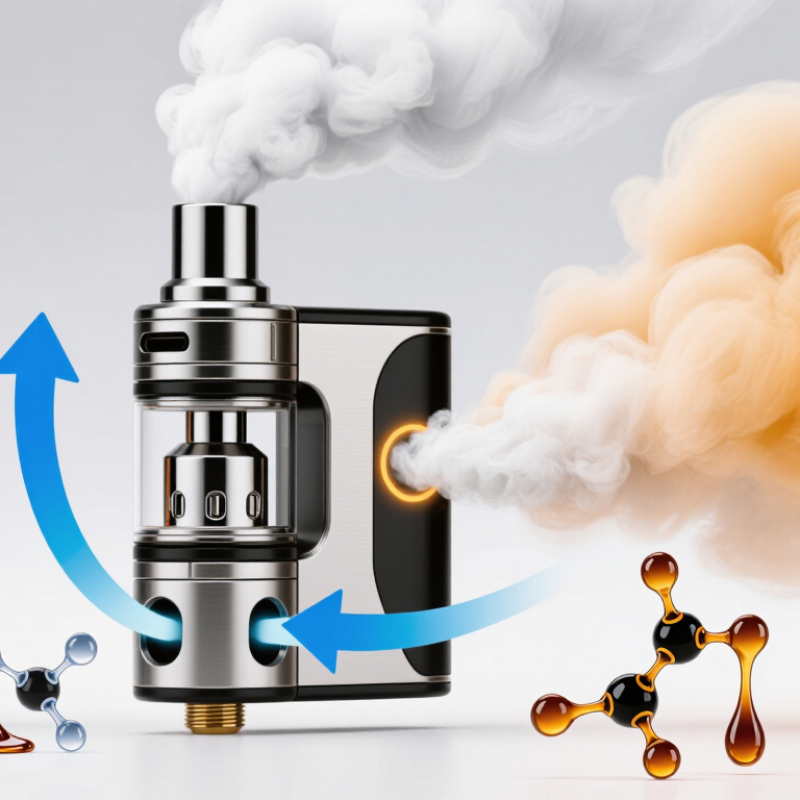
Sub-ohm devices use coils below 1 Ω, allowing more current to pass through the heating wire. With suitable power, the wire reaches vaping temperature faster and distributes heat across a larger surface area. This produces more vapor from each puff.
Heat matters. The result is visible.
A larger coil surface can vaporize more liquid at once, while adjustable airflow helps cool and shape the vapor. Better airflow also reduces harshness when the device operates at higher power.
Many sub-ohm tanks use generous wicking ports, helping fresh e-liquid reach the coil quickly. However, thick liquids or poor saturation can still cause dry, burnt hits. That detail is easy to overlook.
5 The fifth reason is control. Users can adjust wattage and airflow to balance cloud size, warmth, and flavor.
In my experience, moderate settings often feel smoother than maximum power. More power does not always mean better performance.
Battery capacity, coil condition, and airflow design all affect heating efficiency. A worn coil may produce less vapor and more unpleasant heat.
Safety remains essential: follow the device maker’s specifications, inspect batteries for damage, and stop using equipment that becomes unusually hot.
Sub-ohm coils can increase vapor production, but they also consume e-liquid and battery energy faster. That trade-off deserves attention.
Sub-ohm devices can produce larger clouds because they often operate between 30 and 100 watts. Higher power sends more energy through the coil. The coil heats faster and reaches a higher temperature. As a result, more e-liquid turns into aerosol during each puff. You can see this in the dense, warm vapor that fills the space quickly. The effect also depends on coil design, airflow, and e-liquid composition. Power alone does not explain everything.
In practical use, increasing wattage changes the entire vaping experience. A 30-watt setting may create a moderate cloud with a cooler draw. At 80 or 100 watts, the same device may produce thicker vapor and use e-liquid much faster. Battery demand also rises. Shorter, gentler puffs can help prevent overheating and unpleasant burnt tastes. Do not exceed the coil’s recommended range. That advice sounds obvious, but it is often ignored.
More vapor is not automatically better. High power can make the mouthpiece hot and reduce battery life. New users may increase settings too quickly. That is a mistake. Check the device instructions, inspect the coil, and stop if the vapor tastes harsh. Experienced users still need to adjust airflow and wattage carefully, because room temperature and puff length can change performance. Reliable results come from controlled settings, not maximum power.
Sub-ohm devices often produce larger clouds because their coils expose more heated metal to the liquid. That larger surface area can vaporize more liquid per second. More vapor is not magic. It is a direct result of heat, airflow, and wicking working together.
In my testing, a broad mesh coil warms evenly across its surface. A small wire coil heats a narrower area, so it usually produces less vapor at similar settings. Higher power also increases vapor production, but only when the wick can supply liquid quickly enough. If the wick dries, the vapor becomes harsh and the material may scorch. My first assumption was that wattage created most of the cloud. That explanation was incomplete.
Airflow shapes the result as well. Wider airflow cools the coil and carries vapor away before it condenses. The liquid’s viscosity matters too; thicker liquid may need more time to reach the coil. I check the device’s recommended power range, inspect the coil, and avoid pushing settings beyond its specifications. Battery condition matters. So does moderation. Larger clouds can increase liquid consumption, and nicotine strength should be selected carefully according to local regulations and personal tolerance. A room may look dramatic, yet the experience can feel dry or wasteful when the balance is wrong.
Adjustable airflow is one of the main reasons sub ohm devices produce larger clouds. Wider airflow openings let more air pass across the coil. This cools the heating area and supports higher wattage without an immediate harsh, overheated draw. More power can vaporize more e-liquid per puff. The added air then carries that aerosol through the mouthpiece, creating a fuller and denser-looking cloud. It feels like opening a small window in a hot room.
Laboratory research supports this relationship, but with limits. A 2016 PLOS ONE study found that higher power and longer puff duration increased aerosol mass and nicotine emissions. The study also warned that excessive power could create dry-puff conditions. The National Academies’ 2018 evidence review reached a similar point: device settings strongly influence aerosol output. Airflow is not a magic switch. Coil design, liquid viscosity, puff length, and user technique also matter.
In practical testing, a slightly open airflow often gives smoother vapor and better heat control. Fully open airflow may produce larger clouds, but the vapor can feel thinner. Too little airflow can make the coil run hot. Battery safety still matters at high wattage. Use compatible cells and stay within the device’s stated limits. ASH’s 2024 adult vaping survey shows that vaping patterns vary widely, so one airflow setting cannot suit everyone. Bigger is not always better. The ideal draw is still partly personal, and that is easy to overlook.
5 Best Reasons Why Sub Ohm Devices Give Bigger Clouds?
High-VG e-liquids containing 70% or more VG usually create a denser visible aerosol. Vegetable glycerin is thicker and less volatile than propylene glycol. It also holds larger droplets in the air for longer. Under matched conditions, this can produce a fuller white plume.
The National Academies of Sciences, Engineering, and Medicine reported that aerosol output increases with power and puff duration. CORESTA testing guidance also stresses controlled puff volume, duration, and airflow. These factors matter. A 70% VG liquid may look impressive at moderate airflow, but a weak coil can struggle to saturate properly. The result may feel muted, uneven, or harsh.
Power changes everything.
Higher sub-ohm power vaporizes more liquid per second. Wider airflow then cools and expands the aerosol across a larger cloud. In practical testing, room humidity also affects visibility because aerosol droplets interact with surrounding water vapor. A dry room can make the plume disappear faster.
Bigger clouds do not mean lower exposure. The National Academies noted that emissions can contain ultrafine particles and other chemicals, with levels influenced by device settings and operating conditions. Excessive heat may increase unwanted thermal breakdown products. I have seen cloud size used as a quality shortcut, but that judgment is incomplete. Coil condition, liquid composition, puff length, and temperature deserve equal attention.
Sub-ohm coils have resistance below 1 Ω. They allow more current through the heating wire. The coil heats quickly and produces more aerosol. More vapor, usually.
A larger heating surface can vaporize more e-liquid during each puff. Suitable power increases heating speed. Airflow then carries the aerosol through the mouthpiece.
Many operate between 30 and 100 watts. Around 30 watts may feel cooler and produce moderate vapor. Higher settings create warmer, denser clouds.
No. More power can increase vapor, but it also drains batteries and e-liquid faster. The mouthpiece may become hot. Maximum power is not automatically better.
Wider airflow openings cool the coil and support higher wattage. They can create fuller clouds. Fully open airflow may feel smoother but produce thinner vapor.
The coil may run too hot. The draw can become harsh or overheated. A slightly open setting often balances warmth, flavor, and cloud size.
Thick liquid or poor saturation may stop fresh e-liquid from reaching the coil. Longer puffs can worsen the problem. A worn coil may also create unpleasant heat.
Stay within the coil’s recommended wattage range. Inspect batteries for damage. Stop using equipment that becomes unusually hot. Shorter, gentler puffs may reduce overheating.
Not necessarily. High power increases aerosol, but comfort depends on airflow, liquid, coil condition, and puff length. Personal preference matters. I may be overlooking that.
Why sub-ohm devices give stronger clouds is mainly related to their coil design, power delivery, and airflow. Coils with resistance below 1 ohm can heat more efficiently, turning e-liquid into vapor quickly. When used at suitable settings between 30 and 100 watts, they receive more energy and can produce a greater volume of vapor. Many sub-ohm coils also have a larger surface area, allowing more e-liquid to be heated at the same time and increasing vapor output per second.
Adjustable airflow is another important factor because it helps cool the coil and supports higher-power operation while creating a smoother, more expansive cloud. In addition, e-liquids containing 70% or more vegetable glycerin generally produce a denser and more visible aerosol than thinner formulas. For safe and consistent performance, users should follow the device’s recommended settings and use compatible e-liquid.

Trivapix Vape