A B2B sourcing whitepaper for global brands, distributors, and procurement teams evaluating herbal vaporizer OEM/ODM capability, factory evidence, compliance readiness, localization support, and long-term supply resilience.
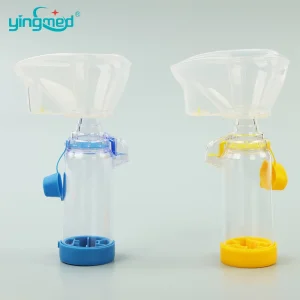
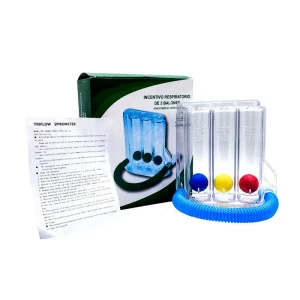
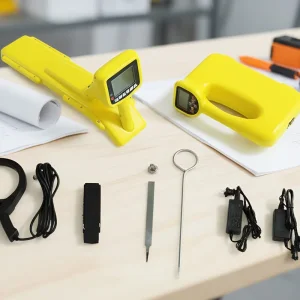
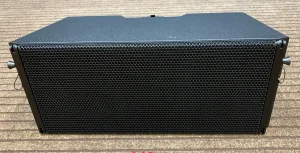
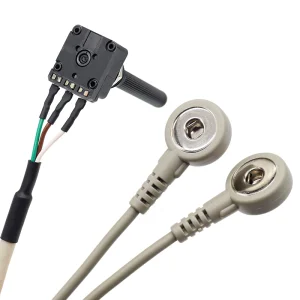
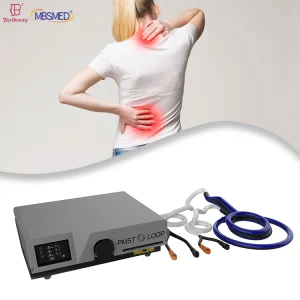
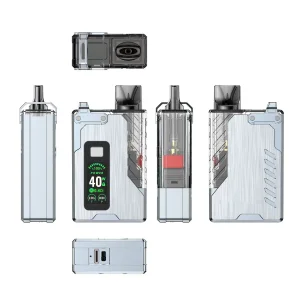
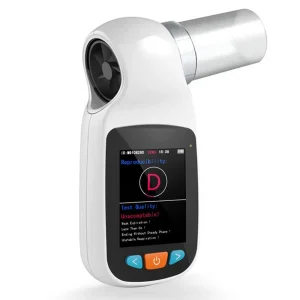
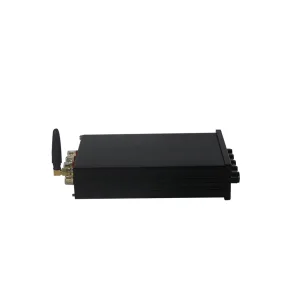
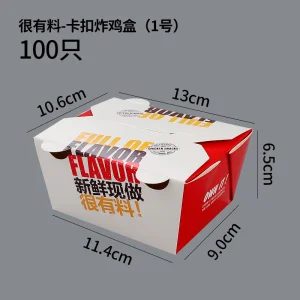
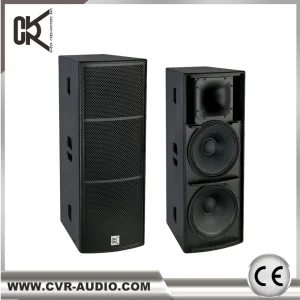
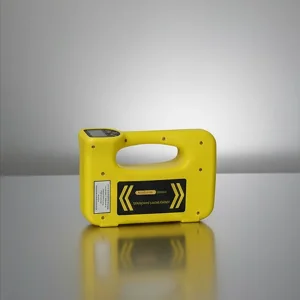
The following eight products are retained from the company’s published catalog. For global buyers, the strategic value is not one product category alone; it is evidence of multi-category assembly, electronics integration, medical-adjacent quality control, packaging coordination, and export handling that can be adapted to herbal vaporizer OEM/ODM programs. Every image is displayed proportionally, and every product URL remains active.
Enterprise buyers searching for a China herbal vaporizer manufacturer are usually not at the first stage of research. They are comparing supplier risk. They need to know whether a factory can support a legal herbal vaporizer program with stable heating performance, cleanable material paths, battery safety discipline, packaging localization, documentation, and predictable lead times.
Google’s Search Quality Rater Guidelines reward pages that demonstrate experience, expertise, authoritativeness, and trust. For a B2B manufacturing topic, that means verifiable factory evidence, transparent capability ranges, documentation logic, and honest boundaries between adjacent products and the specific herbal vaporizer project. A page that simply repeats “best manufacturer” without proof creates no information gain.
This page therefore preserves the company’s published product catalog and company profile while adding procurement-focused information gain: audit prompts, material and battery considerations, compliance boundaries, localization workflows, and a practical Q&A for global buyers. The result is a semantic bridge between search intent and a real supplier evaluation process.
A published footprint of more than 6,000 square meters and 100,000 PCS/day output supports volume discussions when scope, tooling, line allocation, and current capacity are confirmed by audit. Buyers should request current line loading rather than relying on a headline number.
The company states 10 years of accumulated experience, Puff-series commercialization, and OEM/ODM support for internationally renowned e-cigarette enterprises and important wholesalers. That experience is relevant to herbal vaporizer programs when design control and product-specific validation are in place.
The catalog includes medical-adjacent products and an ISO 13485-certified medical cable assembly. This is a useful indicator of adjacent regulated manufacturing awareness, but buyers must confirm the exact certificate scope, product family, and factory site before applying it to a herbal vaporizer project.
Export programs require more than English packaging. Buyers need destination-market labels, warning text, plug and charger configurations, manual translation, accessory kits, batch coding, and change notification. A factory-bound partner should coordinate these details before mass production.
Global buyers of portable and desktop herbal vaporizers increasingly evaluate suppliers through product-risk categories, not only unit price. The following six requirements should be converted into written specifications, sample test plans, and purchase-order acceptance criteria.
The botanical chamber, air path, mouthpiece, seals, and cooling path must be material-compatible, cleanable, and validated for the intended legal botanical use. Buyers should request material declarations, heat-exposure data, and change-control procedures. Stainless steel, ceramic, glass, and food-grade silicone choices must align with the brand’s cleaning, flavor, and safety positioning.
Temperature stability, ramp consistency, overcharge protection, short-circuit protection, cell traceability, and USB-C charging behavior are core engineering issues. For portable herbal vaporizers, thermal cutoff and firmware safeguards should be validated at both PCBA and finished-product levels, with clear pass and fail thresholds.
Request drop, vibration, aging, cycle, airflow, temperature-uniformity, charger-compatibility, and packaging transport tests where relevant. A supplier that cannot show test criteria, sample size, environmental conditions, and failure limits is not audit-ready, even if the sample feels acceptable in hand.
IQC, IPQC, OQC, golden samples, batch coding, retained samples, CAPA, and failure-analysis loops matter more than a certificate image alone. Buyers should confirm how deviations are escalated, how rework is segregated, and how the factory links finished goods to critical components and production lots.
Herbal vaporizer rules vary by market and continue to evolve. A supplier should support labeling, age-restricted packaging, warning text, material declarations, and document packs, while the brand remains responsible for local legal review. The factory should not promise universal compliance without stating the market, product category, and evidence basis.
Private-label launches need DFM feedback, CAD iterations, tooling plans, artwork control, manual translation, accessory kits, and market-specific power configurations. A clear NPI gate process—concept, prototype, engineering validation, pilot run, mass-production approval—reduces late-stage packaging and firmware changes.
China remains central to the global vaporizer supply chain because of its electronics cluster, battery ecosystem, precision tooling, rapid prototyping, packaging suppliers, and mature export logistics. At the same time, regulation is tightening across many destination markets. The winning model is not a low-cost catalog item; it is a documented, auditable, localization-ready product platform.
For global distributors, private-label brands, wellness retailers, and regulated adult-use channels in markets where herbal vaporizer products are legal, procurement teams are shifting from “Can you make this?” to “Can you prove that you can make this consistently, document it correctly, and support my market after launch?” A factory-bound foreign trade enterprise can shorten the distance between engineering, production, and export documentation—provided that responsibilities are written into the quality agreement.
Multi-line assembly, incoming inspection, production tracking, and packaging coordination support buyers who need repeatable output. The scope should include approved BOM, critical-to-quality characteristics, line capacity, and escalation rules for component shortages or process drift.
Brands often need a market-ready package rather than a new architecture. Platform selection, shell customization, packaging artwork, manual localization, accessory kits, and retail-ready presentation can shorten the path from concept to first shipment.
Depending on destination market, buyers may request material declarations, battery documentation, test reports, labeling files, packaging artwork, and change records. A structured document request list should be agreed before tooling, because missing evidence can delay launch or shipment.
Language, plugs, chargers, age-restricted packaging, warning statements, serialization, and after-sales spare parts vary by market. Localization should be managed as an engineering deliverable, not as a last-minute sticker applied after production.
Future competitiveness will be shaped by thermal precision, battery intelligence, automated quality checks, material traceability, and documentation readiness. The roadmap below is directional and should be validated against the buyer’s market, product category, budget, and legal review.
Hybrid convection and conduction paths, ceramic chambers, closed-loop temperature sensing, and consistent session stability will remain central to premium herbal vaporizer positioning. Buyers should require temperature-profile reports, not only target temperature claims.
Battery management systems, cell traceability, USB-C charging profiles, thermal event logging, and robust connector design will become differentiators as buyers demand more accountability from portable devices and charging accessories.
In-line flow checks, automated calibration, serialized records, and digital batch release can reduce human error and improve audit response. The goal is not automation for its own sake; it is repeatable evidence for every critical-to-quality characteristic.
Recyclable packaging, material selection, repairability modules, and documentation-ready data structures will matter as more markets explore digital product information and extended producer responsibility frameworks.
The bars are directional R&D priority indicators, not certification scores or guaranteed product performance claims.
International buyers need a supplier who can separate what is known, what is documented, and what still requires local legal review. That distinction is a trust signal, not a weakness. It protects the brand, the factory, and the end customer.
Build a document matrix by market and product version: BOM, material declarations, battery information, charger specifications, labeling proofs, packaging artwork, test reports, and change records where applicable. The matrix should identify owner, status, and revision.
Translation, warning placement, age-restriction messaging, batch code position, retail barcode, and regulatory symbols must be checked against approved artwork. Avoid sticker-based fixes that can create mismatches after mass production begins.
Plug type, charger output, cable specification, USB-C behavior, and accessory kits should be fixed before pilot run. Buyers should validate compatibility, labeling, and packaging content for each destination SKU.
Batch records should link critical components, production date, test results, and final packaging. Where serialization is required, the factory should define data format, printing method, verification step, and rework control.
Herbal vaporizer products are restricted in many markets. Packaging, manuals, websites, and sales materials should avoid unapproved health claims and should support age-restriction controls required by the destination market and the brand’s own policies.
Spare parts, troubleshooting guides, return-analysis workflows, and change-notification rules should be agreed before launch. Any material, PCBA, firmware, battery, or packaging change should be reviewed against the approved sample and documentation pack.
The published catalog includes an ISO 13485-certified medical cable assembly. This is a useful signal of adjacent regulated manufacturing discipline, but buyers must request the specific certificate scope for any herbal vaporizer project. E-E-A-T is built by verifying claims, not by assuming that one certificate applies to every product line.
The original company profile is preserved below. For SEO and procurement reliability, the strongest approach is transparent source content plus clear verification steps: audit the site, test the sample, confirm certificate scope, and sign a quality agreement before mass production.
Our company is positioned as a new type of foreign trade enterprise (deeply bound with the factory). At present, the main products mainly include but are not limited to: Electronic cigarettes, disposable electronic cigarettes, electronic cigarette accessories, consumer electronic products, clothing... Since its establishment, the company has always adhered to the tenet of "customer first, quality first, service first", we support the business philosophy of "help customer make money first", and strive to provide customers with better services and better products. When the economy becomes more and more globalized, we are willing to work hard to make Chinese products more convenient to go abroad and better serve foreign customers.
We look forward to sincere cooperation with more companies to achieve a win-win situation. We are a professional design, development, production, sales of electronic cigarette company, the company covers an area of more than 6000, with experienced staff 1000 people, the company has a strong production capacity with 100000 PCS/day output, which proving disposable cigarette cartridge e-cigarettes and rechargeable oil-injected e-cigarettes for the domestic and foreign customers.
The company's team has accumulated 10 years of professional experience in this field, and has gained an important market position in China, North America, Russian and European countries.
The company has a research and development team to keep up with the market demand, products are popular which leads the industry trend. It has launched Puff series, which is deeply loved by customers. It also provides OEM and ODM services for internationally renowned e-cigarette enterprises and important wholesalers. In order to ensure the continuous trust of customers, the company strictly controls the quality of products, so that customers have a good product experience. Therefore, excellent product quality has become one of the important factors for our company to have a certain market position.
In 2016, the company was founded, focusing on the R & D and manufacturing of electronic cigarettes with a team of 8-10 people; the next year, it expanded overseas markets and realized foreign trade export through e-commerce platform. In 2018, we established our own production line to integrate manufacturing and foreign trade business. Up to now, it has developed into a team of 300 people and has become an electronic cigarette enterprise integrating R & D, production and sales. Its products are exported to many countries in Europe and America, and its annual export volume has grown steadily.
Vape Puff, Vape Factory, E Cigarette, Disposable Vape, Wholesale Vape, E Vape, Empty Vape, Wholesale I Vape, Wholesale E Cigarette, Vape Pen


These answers are written for B2B buyers. They are not legal advice and do not replace destination-market regulatory review. The objective is to help procurement teams ask better questions and verify evidence before mass production.
It should mean a best-fit supplier for a specific product, market, and risk profile—not an unverified superlative. A serious buyer should compare factory-bound capability, product-specific engineering, quality records, documentation support, lead-time reliability, and willingness to reject unclear compliance claims. The correct evaluation is a combination of sample performance, audit evidence, certificate scope, and written quality agreements.
The published profile states OEM and ODM services for internationally renowned e-cigarette enterprises and important wholesalers. For herbal vaporizers, the exact scope must be confirmed during NPI: platform selection, chamber and air-path design, heating control, battery architecture, housing tooling, packaging localization, and destination-market documentation. Buyers should start with a requirements brief, a prototype gate, and a written statement of work.
Request a controlled test protocol rather than subjective comments. The protocol can include target and actual temperature curves, recovery time, temperature uniformity, airflow resistance, heating-cycle endurance, material contact surfaces, and cleaning procedure. For herbal vaporizers, flavor and vapor quality are influenced by the entire system—not only the heater—so chamber geometry, cooling path, and material selection should be reviewed together.
At minimum, confirm IQC for critical components, in-process controls, final OQC, golden-sample approval, batch records, and failure-analysis workflow. Product-specific checks may include temperature accuracy, battery protection, charging behavior, drop and vibration tests, airflow, leak or isolation checks where relevant, packaging transport testing, and retained samples. The purchase order should state sample size, acceptance criteria, and rework rules.
Document needs vary by market and product version. Typical requests include BOM, material declarations, battery and charger information, labeling proofs, packaging artwork, test reports, and change records where applicable. The brand should provide the destination-market legal requirements or work with a qualified compliance specialist. A supplier should not claim universal compliance without identifying the market, product category, and evidence basis.
MOQ depends on platform selection, custom tooling, material finishes, packaging, and accessory configuration. A practical path is: requirements review, preliminary quote, paid sample or prototype, sample approval, packaging proof, pilot run, and mass production. Lead time should be quoted by gate, not as a single number, because tooling and artwork approvals often create the largest variance.
Yes, localization should be planned as part of the product definition. It can include language-specific manuals, warning statements, age-restriction messaging, retail packaging, barcodes, serialization, plug and charger configurations, and accessory kits. Buyers should approve final artwork and translation before mass production and should keep version control for every SKU.
Use a layered verification process: request a live video or on-site audit, verify business license and certificate scope, review quality records, test samples under your own protocol, check references, and start with a controlled trial order. A website can show capability, but only documents, production evidence, and repeatable test results can reduce sourcing risk. The strongest suppliers welcome specific questions and clear acceptance criteria.
The published portfolio demonstrates electronics, assembly, consumer-product, medical-adjacent, and packaging coordination experience. Final product architecture must be confirmed during NPI. Portable and plug-in categories require different battery, thermal, and safety validation plans, so buyers should ask for product-specific evidence rather than assuming that adjacent experience automatically transfers to every herbal vaporizer format.
The direction is toward more documentation, more automation, better battery intelligence, clearer material traceability, and market-specific localization. Price will remain important, but supplier selection will increasingly depend on evidence quality, change control, responsible marketing, and the ability to support destination-market requirements without creating launch delays.
The remaining eight products from the original catalog are preserved below with their original image URLs and product links. Together with the first showcase, the full sixteen-item catalog remains available for buyers reviewing the company’s cross-category manufacturing, assembly, and export portfolio.
 Trivapix Vape